Acusmática
Album with works by the composer Daniel Osorio (2025)
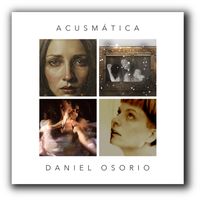




Daniel Osorio (*1971)
[01] z-Loop for electronics (2025) 8:50
[02] Spiegelung for electronics, soprano und speakers (2013) 9:38
[03] Avzajîr for electronics and speaker (2016) 8:26
[04] Sidol for electronics (2012) 4:59
[05] A1 for electronics (2004) 4:41
total playing time: 36:44
Daniel Osorio - Acusmática
December 25 marks the release of Acusmática, the new album by composer Daniel Osorio, which adds five previously unreleased works to his electroacoustic repertoire. This work is defined by a rigorous approach to acousmatic composition, which treats sound as a central and autonomous element. However, the pieces go beyond mere sound abstraction: their structure is articulated around a profound critical and social reflection. Osorio interweaves electroacoustic resources with instrumental and vocal elements, presenting Acusmática not only as a technical exploration, but also as a contemporary acoustic testimony. It is a work that affirms the necessary link between formal avant-garde and the social responsibility of art.
z-Loop is an acousmatic piece for four loudspeakers based on a single sound: the noise of an Israeli army drone circling over Gaza day and night, which the Palestinians call ‘zanana’ (buzzing). Hence the letter “z” in the title of the piece. It is a short piece of source material that, in its original form, is a source of fear and terror. Using simple sound synthesis techniques (granular synthesis and reverb effects), this material is radically altered until it is almost unrecognizable. This undermines the reality of the sound and gives it a new meaning: it is transformed from a sound of oppression into an expression of resistance and hope. The work adds an element of humanity to this transformed sound base: the voices of the inhabitants of Gaza as contemporary witnesses. These voices form a contrast between human resistance and hope and the deadly and mechanical nature of the drone. At the center of this level is the voice of a girl from Gaza expressing her dreams of peace and freedom.
“Let us imagine
that there is a ceasefire.
This word has become a dream
that we hear about in the Gaza Strip.
And if there is a ceasefire,
we will live in peace
and we will live in safety
and we will live in freedom,
and we have hope
that the war will end.”
The contrast is obvious: while the now distorted sound of the drone echoes like a specter of terror, the girl's voice radiates hope and joie de vivre. Her voice celebrates life and defies death: it becomes a pure testimony to human resilience. Syrian artist Ghazal Aldakr created the visual projections for the premiere of this piece in Saarbrücken.
Spiegelung (Image on the Mirror) is a work commissioned for the DVD project "Largo Sguardo" (2013). The work is based on the Stefano Amorese's text "Specchiatura" and later became part of the video by visual artist Horkay Istvàn. "Spiegelung", an acousmatic piece, was composed from recordings by soprano Franziska Erdmann and narrator Jens Alles, to which was added the digital processing of different sound sources, also recorded for the work. The complexity and length of the text allowed generating different sound perspectives through different forms of sound synthesis, which however, are subordinate to rhythm and sound density of spoken text (German).
The work Avzajîr (2016) was composed and premiered for the Kurdish community living in exile in Saarbrücken (Germany), on the occasion of the celebrations for the triumph in the defense of Rojava (Northern Syria) in the hands of women fighters of the YPJ, female defense units, after months of massacre and unpunished killings by the Islamic State. Two texts are fundamental in the composition: a text by the young Afghan girl Laida Omid who immolated herself in protest against the Taliban tyranny, and the last interview and song given by the Kurdish singer and guerrilla fighter Viyan Peyam before falling in combat. Later interpretations of the work were made with a film based on the work of artist Mario Andruet.
Sidol (2012) is part of an international DVD and publication project called “WIDE VIEW.“ The poem, originally written in Italian, has been translated into 23 languages and visually interpreted by 14 video artists. The music was composed based on material that Osorio worked on for the work “Ecuatorial” (2001) in the studios of the Faculty of Arts at the University of Chile, which was transformed into a new work, SIDOL, for the film of the same name by Maya Art. In the words of Maya Art, "the video is a visceral journey into a hedonistic interpretation of consumerism. I extracted the most literal, intense and visual aspects of the poem and created a paranoid, surrealistic loop about a possible cleaning product addiction. The “room“ in the video is the visualisation of modern society’s circle of consumption. It’s a state we might even find pleasant, almost erotic, but which we ultimately can’t escape.“
The work A1 (2004) is an important document in Daniel Osorio's electroacoustic production, being the only work included in the Acusmática album catalog that chronologically corresponds to his formative period at the Faculty of Arts of the University of Chile. “A1” was conceived and coded entirely using CSound, the renowned programming language for audio synthesis.
Francisco Silva, Chilean composer, says about “A1”:
“I understand Daniel Osorio's electronic work "A1" as an extension of his chamber music writing. Although electronics allow us to go beyond the natural range of pitches, in "A1" the tessitura remains within ranges that are perfectly achievable by instruments. The use of glissando — that beautiful paradigm of instability, that passing through the high notes without stopping — blends in with the poetics of the bow and string. The long note and its transformation through articulation (a characteristic of Daniel's chamber music) is also manifested in the computer. I see in the electronic work “A1” a form of resistance to the fetish of its own origin... a need to continue writing... and not, as I have seen suddenly happen, an excuse not to write.…”
© 2025 Daniel Osorio
℗ 2025 Daniel Osorio
Distribution
music-hub
Producer Executive
Daniel Osorio
Editing & Mastering
Antono Carvallo
Composition and electronics
Daniel Osorio
Sopran and speaker for „Spiegelung“
Franziska Erdmann
Speaker for „Spiegelung“
Jens Alles
Speaker for “Avzajîr”
Romina Tobar
Cover Art
Musikandes / Ghazal Aldakr